Part One
I recently took my first Classical Quest road trip to Ripley Ohio! I was joined by my dear friend Christine, her lovely mother, and three awesome children.
Ripley is located on the Ohio River about fifty miles east of Cincinnati. Almost two centuries ago, it was the epicenter of the abolitionist movement in Ohio. Ripley's courageous past was an inspiration to Harriet Beecher Stowe. Her character, Eliza, was based on the true story of a woman who escaped a life of slavery by crossing the Ohio River on ice floes with her child in her arms.
 |
During the Civil War, the Ohio River separated free states from slave states.
What happened in that little river town nestled in a majestic valley would forever change a nation and aspire to rank as pivotal and seminal moments in the heritage of a free people. That place is Ripley-Freedom's Landing in Ohio. ~ Judge Thomas F. Zachman
|
 |
| Inscription on the monument at Freedom's Landing. |
 |
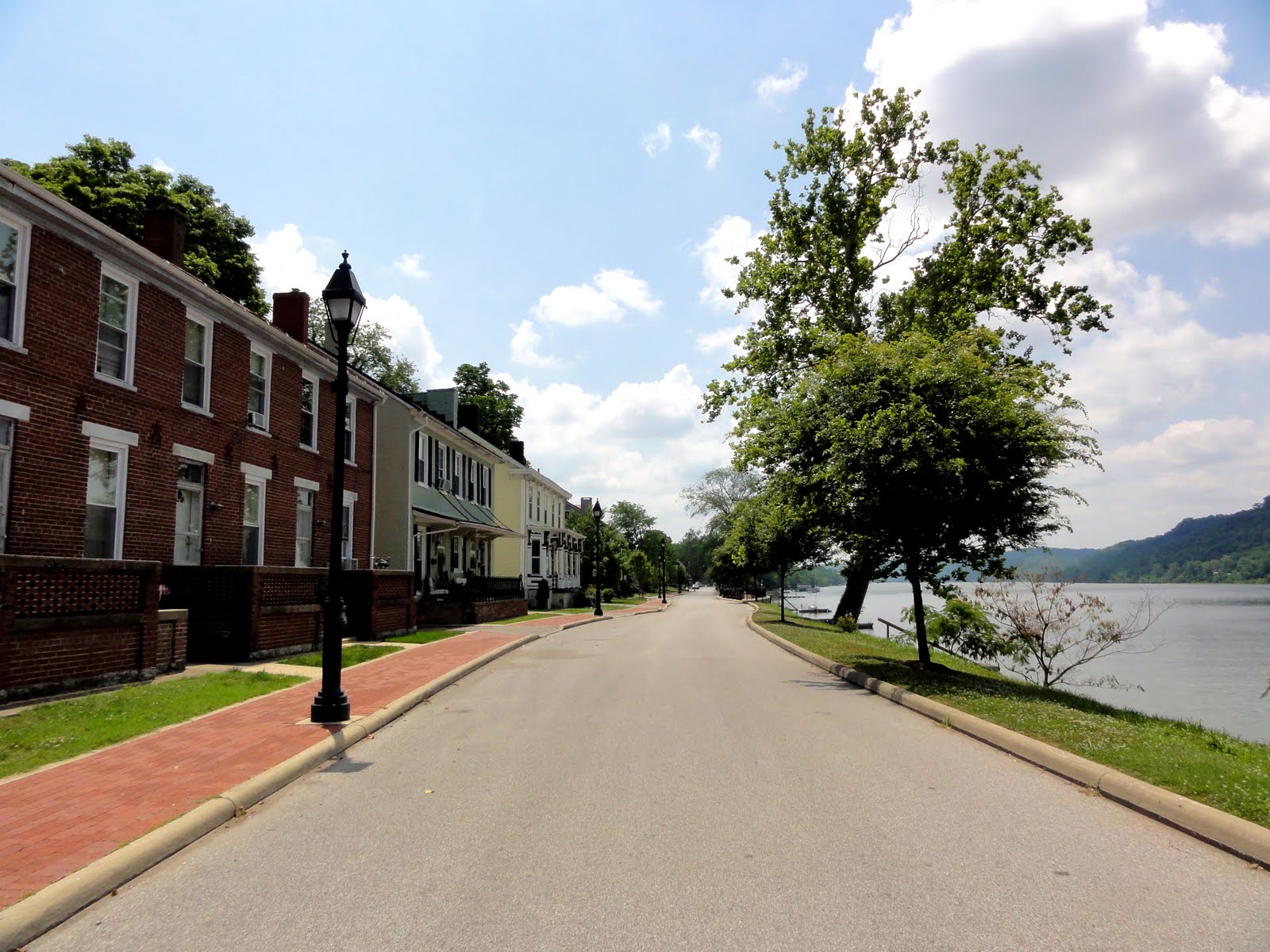
| View of Front Street which faces the river. |
When you walk the streets of Ripley and climb the steps of Liberty Hill you are on hallowed ground. Courage, compassion, and moral outrage against slavery dwelled in the hearts and minds of men and women who lived and walked here. Their words and deeds are not of our time, but have shaped our time and their stories are stories for all time and all mankind. ~ Judge Thomas F. Zachman
A view of Kentucky, which was slave territory during the setting of Uncle Tom's Cabin.
 |
| "A little town with a big heart." |
Peering above Liberty Hill is the Rankin House -- a very important part of the Underground Railroad. It is often referred to as a "lighthouse for freedom".
 |
| Home of Thomas Collins, "Chief conductor on the Underground Railroad" |
 |
"Thomas Collins,
Englishman, cabinet-maker, chief conductor on the Underground Railroad. Its portals were always open. Through this door stole refugees innumerable. The night was never too dark, nor the journey too long for its owner to issue forth, leading the helpless across the hills to freedom."
|
 |
| "Through this door stole refugees innumerable" |
... I am reminded of the most important incident that ever took place at Ripley, during all the years of the activities of the abolition group. Strange as it may seem, no one placed any importance to the episode when it occurred, because we did not know what was in the mind of Harriet Beecher Stowe. It was she who took the incident and wove it into the pages of Uncle Tom's Cabin, making it one of the most appealing and forceful attacks of this epoch-making book.... I am referring to that incident of Eliza with her babe in arms crossing on the ice, chased by dogs to the water's edge. This all really happened, and it took place at Ripley... I have heard the story directly from Rev. John Rankin, to whom Eliza told her story within an hour after she had made the crossing, as she sat by his fireside in his hilltop home. John Parker -- freed slave who became a conductor on the Underground Railroad. His home is on Front Street.

...nerved with the strength such as God gives only to the desperate, with one wild cry and flying leap, [Eliza] vaulted sheer over the turbid current by the shore, on to the raft of ice beyond. It was a desperate leap -- impossible to anything but madness and despair...
 |
...The huge green fragment of ice on which she alighted pitched and creaked as her weight came on it, but she staid there not a moment. With wild cries and desperate energy she leaped to another and still another cake; -- stumbling -- leaping -- slipping -- springing upwards again! Her shoes are gone -- her stockings cut from her feet -- while blood marked every step; but she saw nothing, felt nothing, till dimly, as in a dream, she saw the Ohio side, and a man helping her up the bank...
|
 |
The Signal House -- "a historic home with rooms overlooking the Ohio River. Legends tell of its involvement in the Underground Railroad. A lantern from a skylight in the attic signaled Rev. John Rankin that the waterfront was safe to transport slaves to freedom." Now a Bed & Breakfast.
|
..."I'd be glad to do something for ye," said he; "but then there's nowhar I could take ye. The best I can do is to tell ye to go thar," said he, pointing to a large white house which stood by itself, off the main street of the village. Harriet Beecher Stowe, Uncle Tom's Cabin
 |
| Window on the rooftop of the Signal House -- clearly visible from the Rankin House on the hill above. |
 |
| The proprietor said these roses were prettier a few weeks ago. I thought they were still picture-worthy. |
 |
| A view of Front Street facing East. |
 |
| In my next post, I'll show pictures of my visit to the Rankin House, where Harriet Beecher Stowe was once a guest. |
Other posts in this series: